


School Vision Screenings vs. Comprehensive Pediatric Eye Exams: What North Houston Parents Need to Know Before August
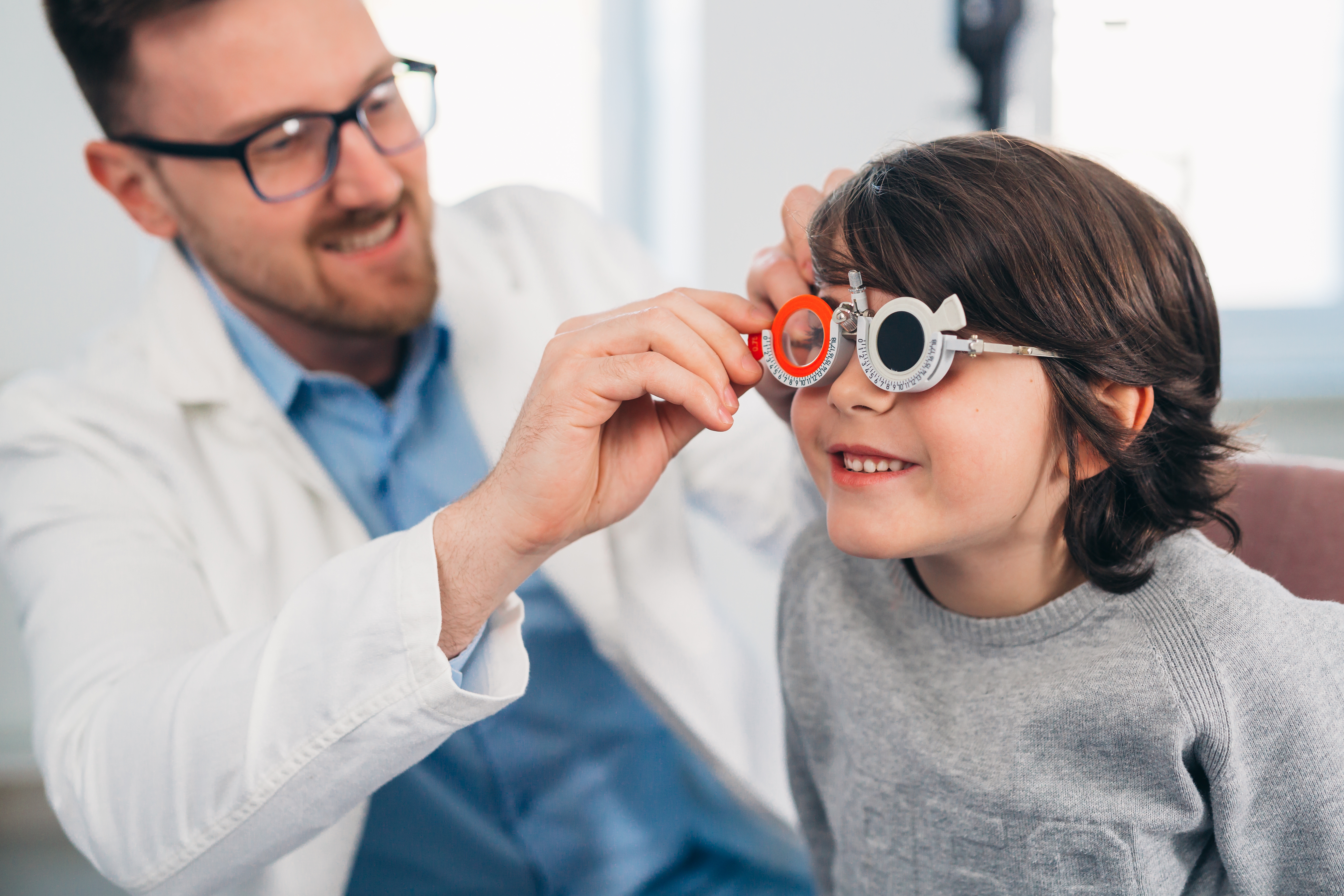
As a new school year approaches, North Houston parents often rely on school vision screenings to confirm that their children can see clearly. These screenings provide a useful first check, but they do not evaluate every visual skill a student needs for reading, writing, screen use, sports, and classroom participation.
A child may pass a school screening and still have an uncorrected prescription, focusing difficulty, poor eye coordination, or an eye health concern. Scheduling a comprehensive pediatric eye exam before classes begin gives families time to identify and address these issues before academic demands increase.
What Does a School Vision Screening Measure?
Most school screenings focus primarily on distance visual acuity. A child may be asked to read letters, numbers, or shapes from an eye chart to determine whether they can see clearly across a room.
Screenings can help identify students who may need further testing, but they do not provide a diagnosis. Testing methods can also vary between schools. A passing result generally means the child met the screening standard on that day, not that every part of their visual system is functioning properly.
The American Optometric Association emphasizes that school vision screenings are not substitutes for comprehensive pediatric eye exams because they can miss conditions that require a more detailed evaluation.
What Makes a Pediatric Eye Exam Comprehensive?
A comprehensive pediatric eye exam evaluates visual clarity, prescription needs, eye coordination, focusing ability, and eye health. Testing is adjusted based on the child’s age and ability to respond.
At Generations Family Eyecare, younger children may identify letters, numbers, or shapes, while infants can be evaluated by observing how their eyes follow a moving object. Retinoscopy can help determine a prescription without requiring a young child to answer which lens looks clearer. Dilation may also be used to obtain an accurate prescription and examine the retina.
A comprehensive exam may assess:
- Distance and near visual clarity
- Nearsightedness, farsightedness, and astigmatism
- Eye alignment and coordination
- Focusing and tracking abilities
- Depth perception
- The internal and external health of the eyes
- Whether glasses or additional care may be needed
These areas matter because classroom learning requires more than seeing the board. Students must keep words clear at close range, follow lines of text, shift focus between a desk and the front of the room, and use both eyes together efficiently.
Signs a Screening May Have Missed a Vision Problem
Children do not always recognize that their vision is unclear or uncomfortable. They may assume everyone experiences headaches, moving words, or tired eyes during homework.
North Houston parents should pay attention when a child squints, holds reading material close, covers one eye, frequently rubs their eyes, or complains of headaches after school. Other possible signs include losing their place while reading, avoiding detailed work, struggling to copy from the board, or sitting unusually close to screens.
These behaviors can have several causes and do not automatically indicate an eye condition. A pediatric eye exam can determine whether vision is contributing to the difficulty.
Why Timing the Exam Before School Matters
Booking an eye exam before or early in August provides time to respond to any findings. If a new prescription is needed, families can order glasses and allow the child to adjust before assignments and screen use increase.
An early appointment also creates a useful baseline for monitoring future changes. Children’s eyes continue developing, and prescriptions can shift during the school years. Generations Family Eyecare provides comprehensive pediatric eye exams designed to evaluate both vision and ocular health for children throughout Houston.
Even children who do not report symptoms can benefit from professional eye care. Identifying a concern early may prevent a correctable visual issue from becoming an unnecessary obstacle during reading, classroom learning, or extracurricular activities.
Help your child begin the school year with clear, comfortable vision by scheduling a comprehensive pediatric eyeexam with Generations Family Eyecare at 22438 Tomball Parkway, Houston, TX 77070. Call (281) 925-7576 to book an appointment.


MAP
© 2025 Generations Family Eyecare. All Rights Reserved. Accessibility Statement - Privacy Policy - Sitemap
Powered by: 